






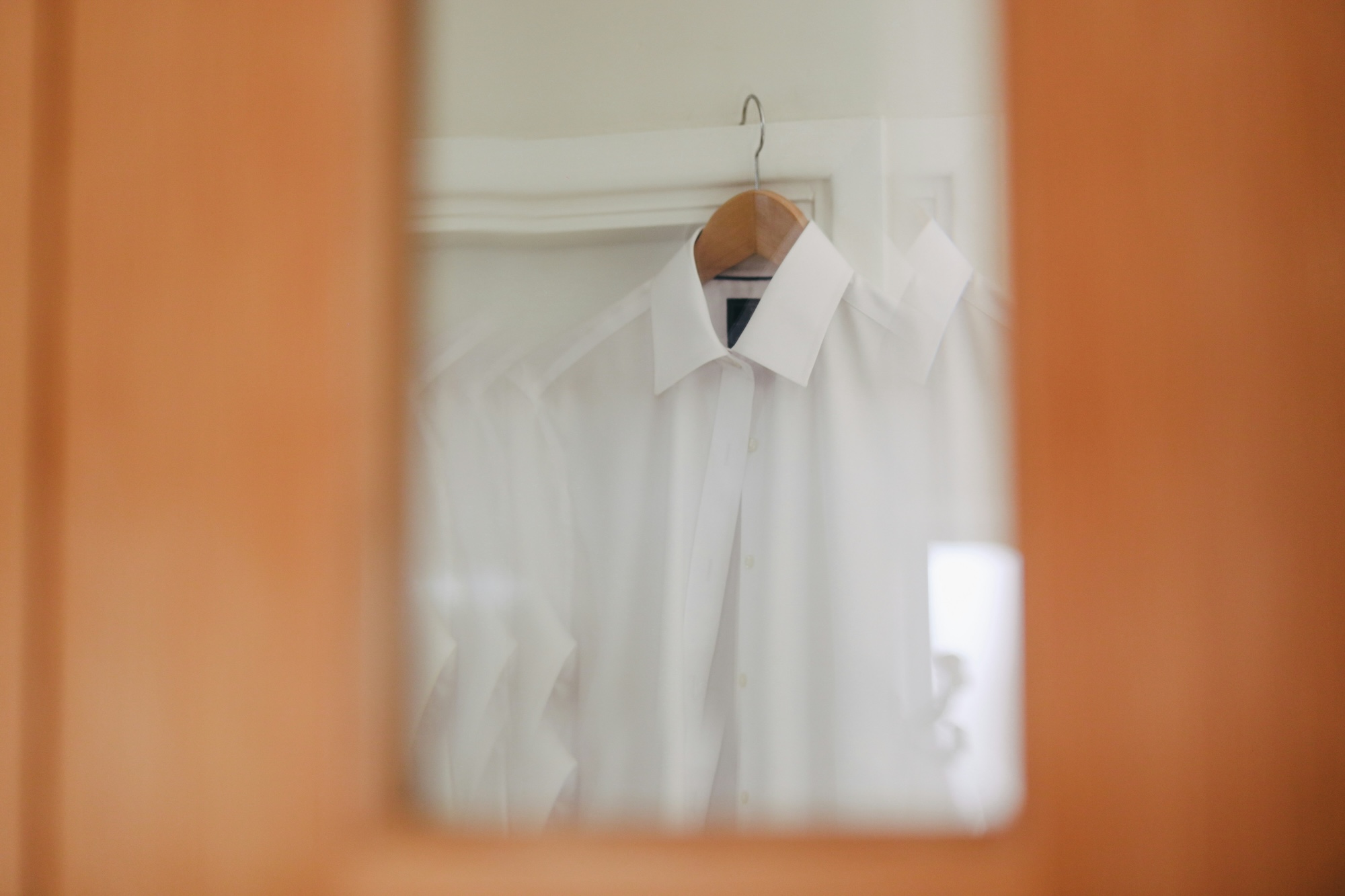
You buy an expensive shirt, then spend dinner trying not to get anything on it.
You skip the spaghetti and order the safe salad. You eat leaning awkwardly over the table.
Before you know it, the shirt is making decisions about what you can and can’t do. You wanted something nice to wear. Instead, you bought yourself a chore.
The same thing can happen with almost anything you acquire.
Money arrives → protect it.
Success arrives → maintain it.
Reputation arrives → manage it.
Love arrives → don’t screw it up.
An audience arrives → don’t alienate them.
The more freedom you’ve earned, the less free you can feel.
You spend years working toward something, imagining how wonderful life will be once you get it. Then you get it, and instead of enjoying it, you become its full-time security guard.
Protecting something becomes a quiet form of surrendering to it.
Guard your reputation too closely, and other people’s opinions start dictating your behavior.
Guard your money too closely, and the fear of watching a number drop starts vetoing the life you worked so hard to afford.
Guard a relationship too closely, and the fear of rejection starts deciding how much of yourself to reveal.
You still possess all these things, technically.
But who’s in charge?
You own the shirt, yet the shirt is telling you what to order for dinner.
I notice this in my own writing sometimes. A voice steps in as I type:
Don’t reveal that.
Make sure this lands.
What will readers think?
Is this too personal?
Does this undermine the person they think you are?
And just like that, the platform I built by saying what I think can become the very reason I don’t say what I actually think.
Here’s the irony: You can lose something by holding on to it too tightly.
You can keep your money and lose the freedom it was supposed to buy.
You can keep your relationship and lose the intimacy that made it worth having.
You can keep your audience and lose the voice that attracted them in the first place.
When you loosen your grip, you finally get to experience what you were protecting. You stop worrying about the stain and actually enjoy the dinner.
The goal is to shift from:
I have more now, therefore I have more to protect.
Toward:
I have more now, therefore I have more to give, risk, and experience.
The first turns abundance into a bunker.
The second turns it into a life.
Related



Bold

